
 简体中文
简体中文 繁体中文
繁体中文 Deutsch
 日本語
日本語 한국어
한국어 Tiếng Việt
 Русский
 ไทย
ไทย Bahasa Indonesia
 Bahasa Melayu
 Filipino
 لالعربية
 Français

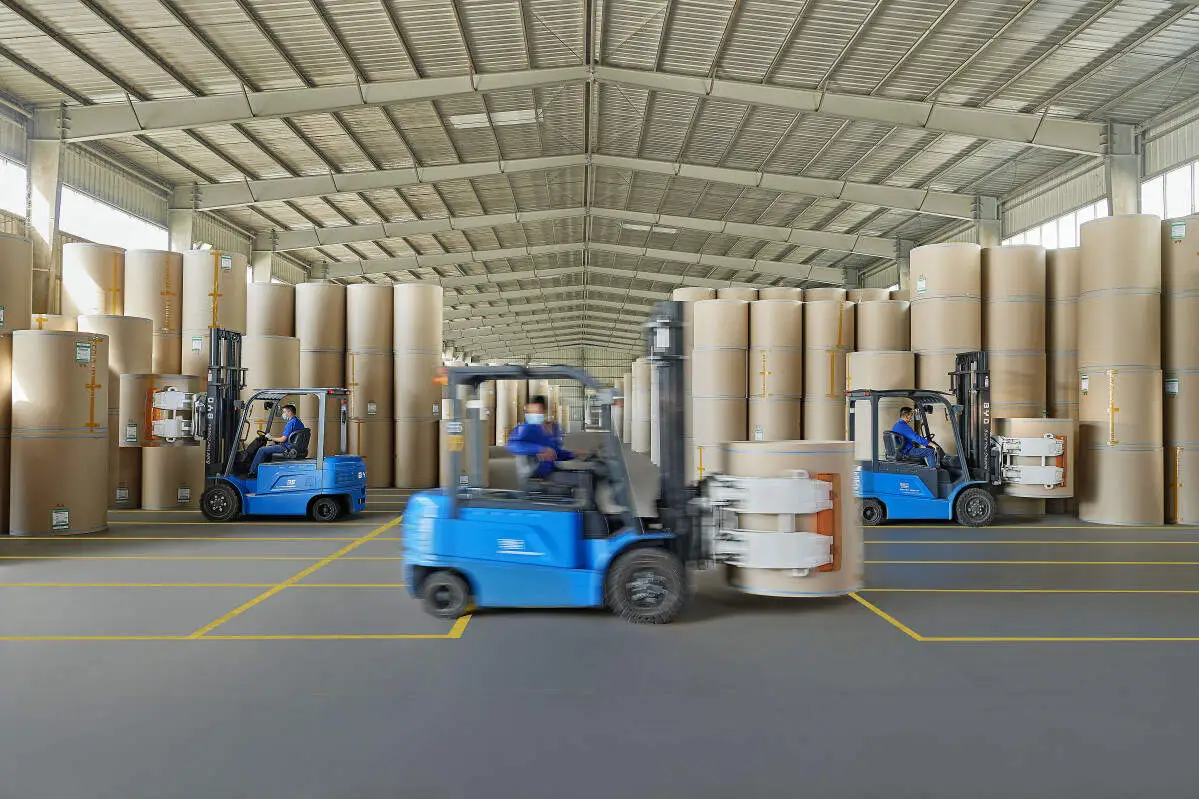
In the process of plant logistics handling, multi-shift or even 24-hour continuous operation scenarios are very common. Such scenarios have clear requirements for the stability, battery life, and maintenance convenience of handling equipment. The 5-ton class is the mainstream selection for medium and heavy loads, and the adaptation of lithium power can effectively make up for the shortcomings of traditional internal combustion or lead-acid batteries. Next, a reasonable adaptation scheme is analyzed from three aspects: core configuration, battery life and fast charging, and operation environment adaptation.
The choice of core configuration needs to be in line with the basic requirements of continuous operation. The first is the motor part. It is recommended to choose an AC asynchronous motor or a permanent magnet synchronous motor with a higher protection level. This type of motor has relatively stable heat control during continuous operation and low maintenance frequency, which can reduce the downtime caused by motor failure. Secondly, the electrical control system should have basic safety functions such as overload protection and undervoltage protection, and at the same time support the load adaptive adjustment of power output, so that when handling different weights of goods, it can not only ensure sufficient power, but also avoid unnecessary power loss. Finally, the frame and the tire, the frame needs to use a strong welding structure to adapt to the long-term high-frequency use of medium and heavy loads; if the tire is working on a flat hardened ground, you can choose solid tires or low roll resistance pneumatic tires, solid tires are easy to maintain, low roll resistance pneumatic tires can further reduce energy consumption and improve battery life, which can be selected according to the ground wear of the enterprise and the importance of energy consumption.
Battery life and fast charging are key adaptation points for multi-shift continuous operation. In the battery life configuration, it is necessary to calculate the total handling workload of the enterprise in a single day, including the single handling distance, the number of round trips, the proportion of goods weight, etc., and then select the appropriate capacity lithium battery pack according to the calculation results. Generally, it is recommended to reserve 10% to 20% of the power balance to avoid insufficient power due to temporary increase in workload. In the fast charging configuration, it is recommended to choose a lithium battery pack and a supporting charger that supports high-current fast charging. Ideally, the charger should be able to replenish the power from 20% to 80% within 1 to 2 hours, so that the workers' shift breaks can be used to replenish energy without special arrangements for long charging downtime. At the same time, the installation of lithium battery packs should preferably use a quick-change structure. When the battery pack is exhausted and there is not enough time to charge, the backup battery pack can be quickly replaced to further ensure the continuity of the operation.
The adaptation of the working environment cannot be ignored either. If there is a certain amount of dust or water vapor in the plant, it is recommended to choose a vehicle configuration with a higher protection level, especially the electrical components. If the plant has a low temperature or high temperature area, the lithium battery pack should have a corresponding temperature control system, such as the preheating function at low temperature and the heat dissipation function at high temperature, to ensure that the battery pack works within a suitable temperature range, prolong the service life and ensure stable output. In addition, if the plant channel is narrow, you can choose a 5-ton lithium forklift with a smaller body size, or configure the side shifter, pitch adjustment fork and other attachments to improve the working flexibility of the narrow space.


