
 简体中文
简体中文 繁体中文
繁体中文 Deutsch
 日本語
日本語 한국어
한국어 Tiếng Việt
 Русский
 ไทย
ไทย Bahasa Indonesia
 Bahasa Melayu
 Filipino
 لالعربية
 Français

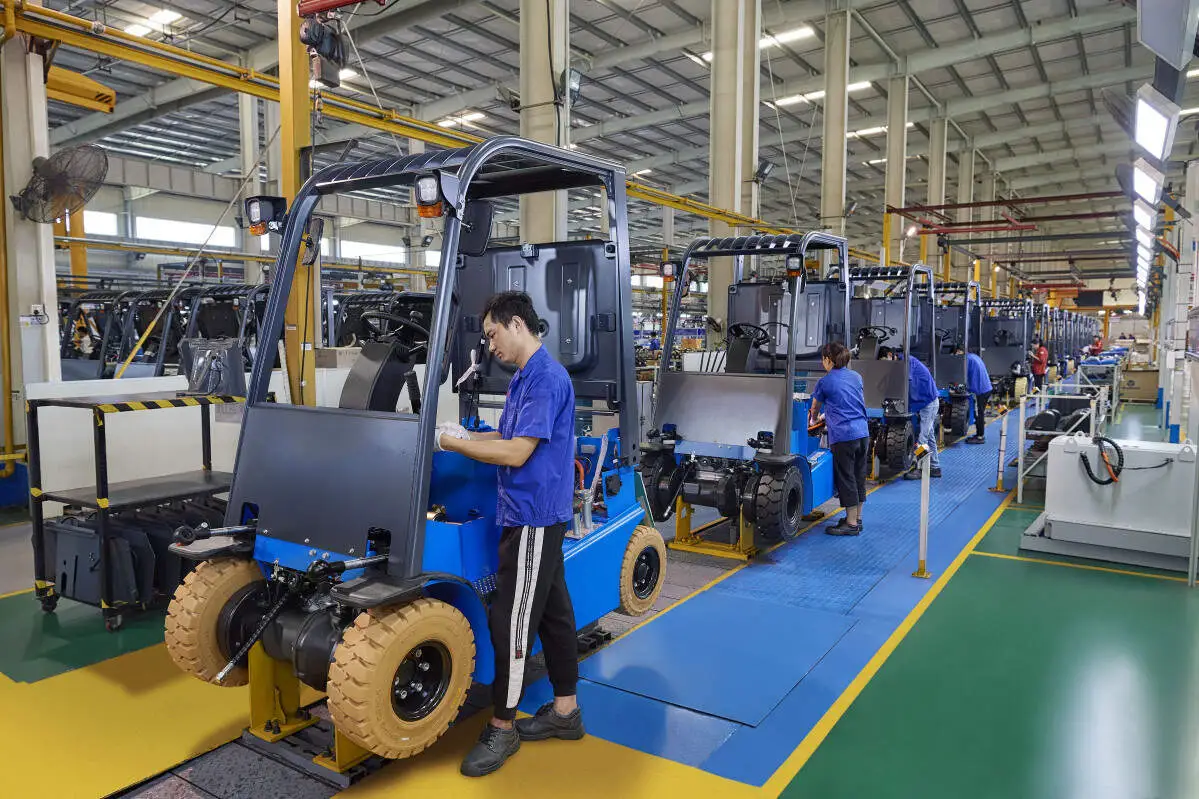
With the development of global cross-border e-commerce and overseas B2B warehouse distribution business, the demand for high-flexibility and low-threshold handling equipment in small and medium-sized overseas warehouses continues to grow. Among them, 1.5-ton electric forklifts have become the mainstream choice for adapting small batches and medium-to-high turnover goods. Fuel forklifts often face strict environmental regulations, limited emissions, and high fuel procurement and maintenance costs overseas. Therefore, cross-border wholesale of 1.5-ton lithium-ion forklifts adapted to overseas scenarios can effectively help overseas warehouse operators reduce costs and increase efficiency.
When selecting a 1.5-ton lithium battery forklift for cross-border wholesale, several core factors for overseas warehousing adaptation need to be given priority. The first is the voltage and power supply interface. There are differences in civil or industrial power voltages in different overseas markets. For example, 110V single-phase or 208V three-phase electricity is commonly used in some North American markets, and 220V to 240V three-phase or single-phase electricity is commonly used in European markets. South East Asia, the Middle East and other places also have different voltage specifications. It is recommended to choose products that can be replaced or customized in advance. Some models can also support wide voltage input to reduce the difficulty of adaptation. The second is the channel width. Some overseas self-built or leased warehouses have higher space utilization and narrower channels. The 1.8-meter to 2.2-meter narrow channel 1.5-ton lithium battery forklift has more advantages, which can improve the storage density and operation efficiency of goods at the same time. In addition, battery life and fast charging capacity, some overseas warehouses implement two or three shifts. It is recommended to choose products that can support 8 to 12 hours of regular operation and support 2 to 3 hours of fast charging to 80% power, reducing capacity loss caused by charging waiting. In addition, the user-friendliness and safety of the operation cannot be ignored. Driving habits in some overseas regions are different from those in China. You can choose the optional model with left and right hand steering. At the same time, you need to confirm that the configuration of warning lights, rearview mirrors, reversing tones, etc. meets local safety transportation standards.
In addition to choosing a suitable 1.5-ton lithium battery forklift, the overseas storage supporting plan also needs to pay attention to storage, charging and maintenance. In terms of storage, it is recommended to plan a special forklift parking area in the warehouse. The ground is flat and well ventilated, and it is avoided to park in wet or chemically corrosive areas for a long time. The charging area should maintain a certain safe distance from the cargo storage area and the operation area. It is equipped with a charging cabinet or charging pile that meets local fire protection standards. Arrange a special person to be responsible for charging management to avoid overcharging or overdischarging. In terms of maintenance, cross-border wholesale can confirm with the supplier in advance whether there is a network of overseas and local cooperative maintenance service providers, or whether it can provide remote technical guidance and quick replenishment services for commonly used wearing parts. Daily warehouse operators can be arranged to perform simple cleaning and inspection according to the product manual, such as regularly cleaning tires, checking the sensitivity of brakes and steering systems, etc.


