
 简体中文
简体中文 繁体中文
繁体中文 Deutsch
 日本語
日本語 한국어
한국어 Tiếng Việt
 Русский
 ไทย
ไทย Bahasa Indonesia
 Bahasa Melayu
 Filipino
 لالعربية
 Français

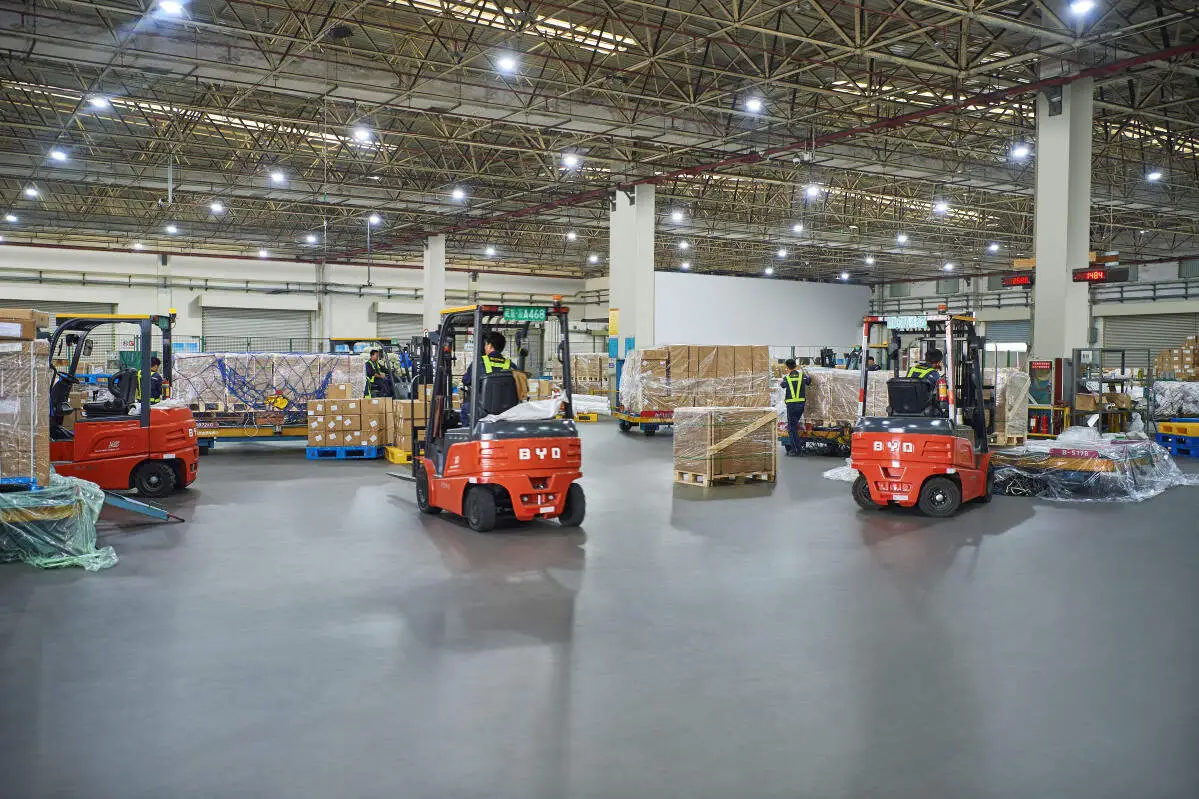
Nowadays, more and more warehousing enterprises are paying attention to lithium-ion forklifts because of their fast charging, stable battery life, and controllable maintenance costs, which are suitable for a variety of operation needs. Among them, 1.5 tons and 2 tons are the commonly used core tonnage for small and medium-sized micro warehousing and some standard warehousing. How to choose accurately according to their own storage scale has become an introductory topic for many managers.
Before choosing a car, you need to sort out three core data, and then combine the ground load-bearing and charging conditions of the site to narrow the scope. The first is the width of the daily main operation channel, followed by the weight of the single average and highest peak cargo handling, and finally the total daily or weekly cargo turnover.
The 1.5-ton lithium-ion forklift is suitable for medium-sized and lower-scale, with narrow daily passages, such as narrow alley picking or dense storage areas. When the passage width is between 1.8 meters and 2.5 meters, the turning radius is small and it can be shuttled flexibly. The average single cargo is 0.8 tons to 1.2 tons, and the highest peak does not exceed a reasonable range. It is suitable for small and medium-sized e-commerce, light industrial warehouses, and small hardware warehouses with daily turnover of hundreds to more than 1,000 pieces.
The 2-ton lithium battery forklift is suitable for a slightly larger scale. The daily channel is between 2.2 meters and 3 meters. The rated load is raised but the turning radius is slightly increased. If the channel is too narrow, it may be difficult to operate. The average single cargo is 1.2 tons to 1.6 tons, and the peak control is within a reasonable range. It is suitable for handling slightly heavier goods, such as small batches of building materials, food and beverage whole holders, machining supporting warehouses, etc. It is commonly used in medium and large-scale e-commerce sorting and standard trade warehouses with daily turnover of more than 1,000 to thousands of pieces.
In addition to the core data, it can be flexibly selected in combination with the development plan. If the scale is expected to expand in the next year or two, the goods or turnover will be improved, and the site conditions will allow for stronger adaptability to avoid short-term duplicate investment.


