
 简体中文
简体中文 繁体中文
繁体中文 Deutsch
 日本語
日本語 한국어
한국어 Tiếng Việt
 Русский
 ไทย
ไทย Bahasa Indonesia
 Bahasa Melayu
 Filipino
 لالعربية
 Français

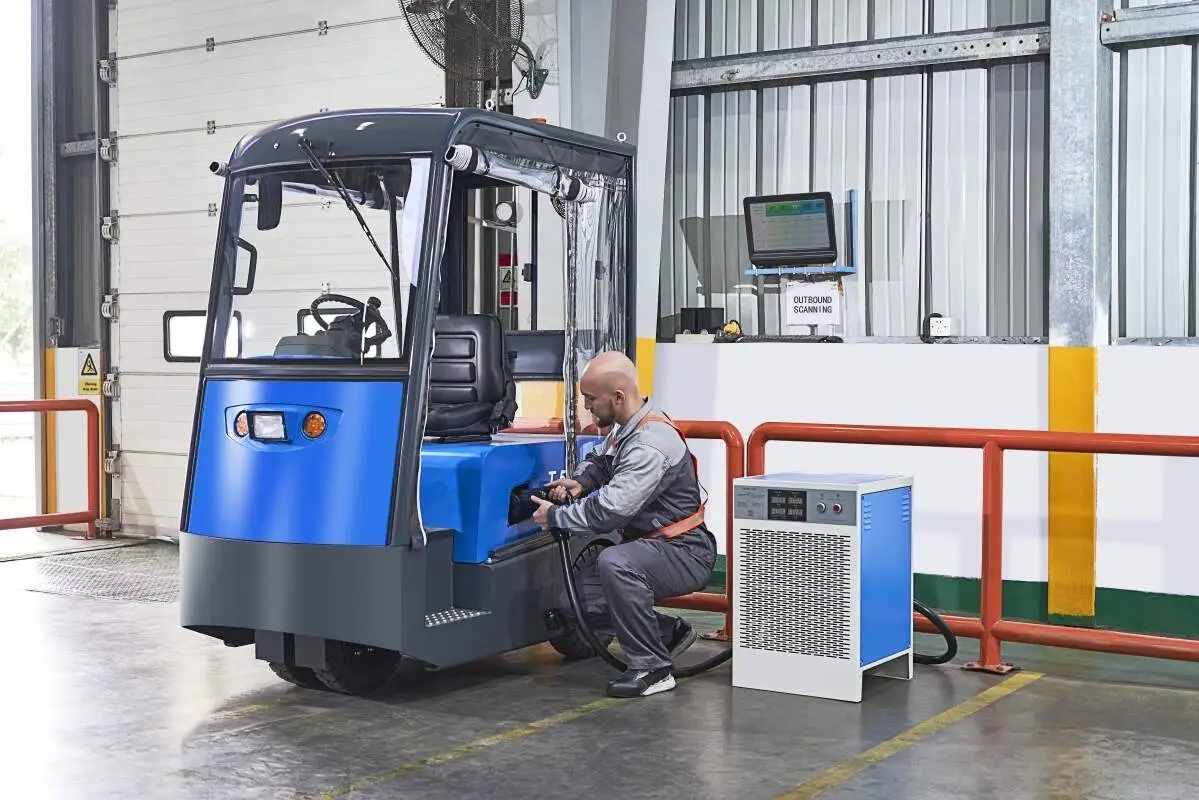
With the expansion of the business scale of enterprises, the lack of storage space channels has gradually become the core problem restricting operational efficiency - narrow channels not only limit the scope of forklift operations, but also easily cause congestion and reduce the speed of cargo turnover. In response to this pain point, the three-way stacking RTR series provides a practical and practical idea for the expansion of storage channels. Without large-scale transformation of the original storage layout, the double improvement of space utilization and operation efficiency can be achieved.
Practical Adjustment of Channel Adaptation
The first is to optimize the channel width adaptation. Conventional stacking forklift operations usually require a wider channel to complete steering and U-turn operations, while the three-way stacking RTR series can be adapted to narrower operating channels with its unique steering structure. It only needs to meet the basic working space requirements to complete the storage operation of goods, effectively revitalizing the storage area that was originally idle due to insufficient channel width.
The second is to adjust the stacking operation path. In the narrow channel, the operator can use the three-way rotation function of the equipment to directly complete the lateral displacement and stacking operation of the goods in the channel, without the need to reserve the turning space like the conventional forklift. By pre-planning the optimal operation route, unnecessary movement is reduced, and the use efficiency of the channel is further improved to avoid channel congestion during operation.
Practical operation method of space utilization improvement
One is the efficient use of high-rise shelves. The shortage of storage space is often not only a channel problem, but also the underutilization of vertical space. The three-way stacking RTR series has excellent high-rise stacking capacity, which can be stably raised to a higher shelf level in a narrow channel environment, converting the previously unusable vertical space into effective cargo space, which is equivalent to expanding the vertical storage space on the basis of the original storage area.
The second is to optimize the layout of the cargo space. Combined with the operating characteristics of the equipment, the enterprise can re-plan the layout of the cargo space: arrange the high-frequency turnover goods in the middle-level easy-access area, which is convenient for fast operation; move the low-frequency turnover goods to the high-rise shelves to make full use of the expanded vertical space. At the same time, rationally plan the spacing of the cargo space to ensure the smoothness of the forklift operation, and further improve the utilization rate of the overall storage space.
Collaborative optimization of workflow
The first is the linkage with the warehouse management system. By connecting the three-way stacking RTR series with the warehouse management system, the intelligent scheduling of job tasks can be realized. The system can allocate job tasks according to the real-time channel occupancy, avoid conflicts between multiple devices in the same channel, and improve the traffic efficiency of the channel.
The second is the standardized training of operators. Organize operators to conduct targeted training to familiarize themselves with the three-way operation characteristics of the equipment and narrow channel operation skills, improve the accuracy and speed of the operation, reduce the channel occupation time caused by operation errors, and ensure the smooth operation of the entire warehousing operation process.
Through the above practical thinking, enterprises do not need to invest a lot of cost to transform the warehouse building, but only rely on the characteristics of the three-way stacking RTR series to effectively solve the problem of insufficient access, achieve the expansion of storage space and improve operational efficiency, and provide strong support for the enterprise's warehousing operations.


