
 简体中文
简体中文 繁体中文
繁体中文 Deutsch
 日本語
日本語 한국어
한국어 Tiếng Việt
 Русский
 ไทย
ไทย Bahasa Indonesia
 Bahasa Melayu
 Filipino
 لالعربية
 Français

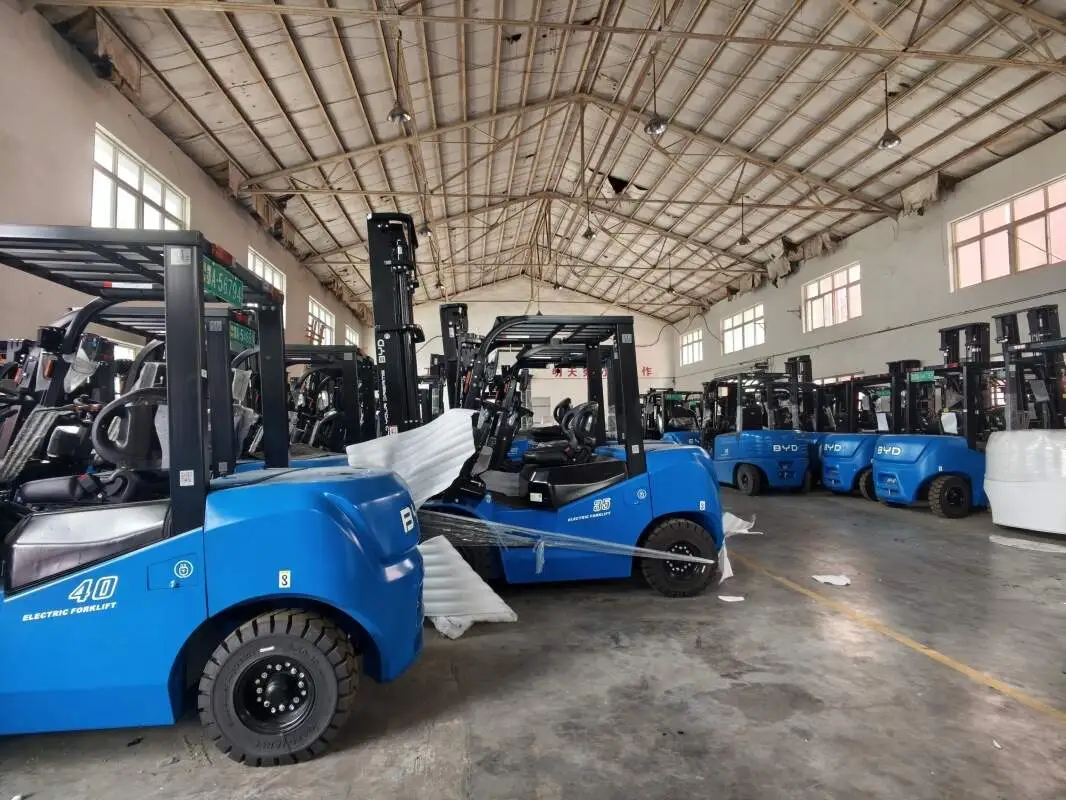
In the process of warehouse automation upgrade, many practitioners will pay attention to whether a specific type of stacker can be used with a magnetic navigation AGV system. Among them, the adaptability of the RTR20i three-way stacker has attracted much attention. Next, this issue is analyzed from multiple dimensions.
Adaptability basis analysis
The magnetic navigation AGV system relies on the magnetic field signal of the ground magnetic strip or magnetic nail to achieve path navigation, while the core function of the three-way stacker is to complete the lifting, handling and stacking of goods in a narrow channel. The body structure of the RTR20i three-way stacker has room for transformation, and its operation logic is in line with the automatic navigation and automatic operation requirements of the AGV system. From a principle perspective, the operation goals of the two are the same, and both serve the automatic circulation of warehoused goods, so they have the basic conditions for adaptation.
Key points of technological transformation
In order to realize the combination of the RTR20i three-way stacker and the magnetic navigation AGV system, several technical transformations need to be completed. The first is the docking of the control system, which needs to be compatible with the original operation control system of the stacker and the navigation control system of the AGV to ensure that the instructions can be accurately transmitted and executed. Secondly, the magnetic navigation sensor is installed, and the magnetic field induction device is installed at the appropriate position of the stacker, so that it can identify the magnetic navigation path signal on the ground. In addition, the walking drive system of the vehicle needs to be optimized to improve the stability and accuracy of automatic walking, so as to adapt to the path planning requirements of the AGV system.
Application scenario adaptation instructions
After the adaptation is completed, this combination solution is more suitable for specific storage scenarios. For example, in a narrow-channel high-shelf storage environment, the narrow-channel operation advantages of the RTR20i three-way stacker combined with the automatic navigation ability of the magnetic navigation AGV can effectively improve the efficiency of cargo access and reduce manual intervention. At the same time, for storage scenarios where the law of cargo flow is relatively fixed, the path stability of the magnetic navigation AGV system can ensure the reliability of the stacker operation and reduce the probability of errors.
In summary, the RTR20i three-way stacker can be equipped with a magnetic navigation AGV system, but targeted technical modifications need to be completed according to actual storage needs to ensure functional compatibility and stable operation of the two. Before implementation, it is recommended to conduct a comprehensive evaluation and commissioning based on its own storage environment and operation requirements.


