
 简体中文
简体中文 繁体中文
繁体中文 Deutsch
 日本語
日本語 한국어
한국어 Tiếng Việt
 Русский
 ไทย
ไทย Bahasa Indonesia
 Bahasa Melayu
 Filipino
 لالعربية
 Français

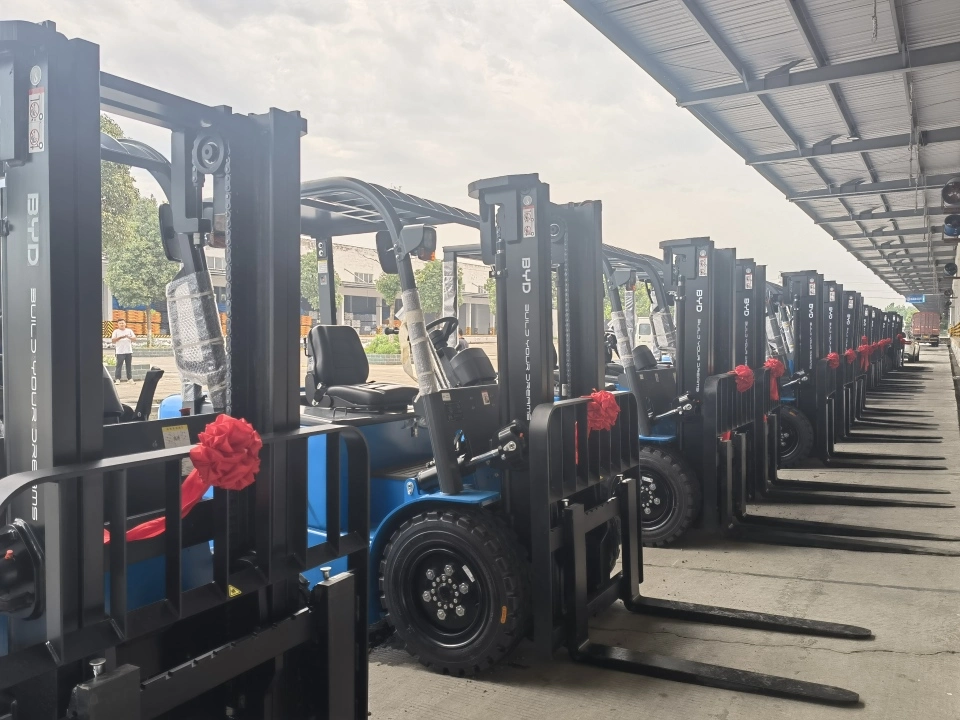
With the upgrade of environmental protection requirements, many fuel-restricted plants have started the replacement of fuel forklifts one after another, and electric forklifts have become the core choice due to their zero-emission and low-noise characteristics. When enterprises promote transformation, accurate cost measurement directly affects the feasibility of the plan. The following provides cost reference from multiple dimensions.
Analysis of the Core Dimension of Electric Forklift Replacement Cost in Limited Fuel Plant Area
Initial procurement and supporting facilities costs
The procurement cost of electric forklifts is affected by parameters such as tonnage and battery life. The purchase price of products with conventional operating tonnage is slightly higher than that of fuel forklifts of the same level, but the investment of charging facilities needs to be planned synchronously. If the factory has a mature power system, the cost can be reduced by optimizing the layout of charging piles. The investment of a single charging pile ranges from thousands to tens of thousands of yuan; if new power expansion is required, additional consideration needs to be given to the cost of line transformation. Enterprises can reasonably plan the number and power of charging piles according to the needs of the operation to avoid excessive investment.
Daily operation and maintenance and energy consumption costs
Compared with fuel forklifts, the daily operation and maintenance cost of electric forklifts is significant. Since there is no need to maintain complex components such as engines and gearboxes, maintenance projects mainly focus on routine inspection and maintenance of batteries and motors, and the annual maintenance cost is only one-third to one-half of that of fuel forklifts. In terms of energy consumption, the hourly electricity cost of electric forklifts is only about 20% of the fuel consumption cost of fuel forklifts. Calculated by the average daily operation of 8 hours, the monthly energy consumption expenditure can be reduced by thousands of yuan, and long-term accumulation can effectively reduce operating costs.
Long-term cost control and policy dividends
When calculating the cost of transformation, it is also necessary to take into account long-term benefits and policy support. Some regions have introduced special project subsidy policies for environmental protection equipment transformation. Enterprises can apply for purchase subsidies or operating subsidies for replacing electric forklifts. The subsidy ratio ranges from 10% to 30%, which can directly reduce the initial investment. In addition, the service life of electric forklifts is generally 2 to 3 years longer than that of fuel forklifts, which can reach 8 to 10 years, reducing the frequency of equipment updates and further optimizing the long-term cost structure.
When formulating a replacement plan, an enterprise needs to consider factors such as the operating scenarios of its own factory, the average daily operation volume, and the existing facilities conditions, comprehensively calculate the short-term investment and long-term benefits, and select the appropriate electric forklift model and supporting plan to ensure that the transformation meets both environmental protection requirements and cost control.


