
 简体中文
简体中文 繁体中文
繁体中文 Deutsch
 日本語
日本語 한국어
한국어 Tiếng Việt
 Русский
 ไทย
ไทย Bahasa Indonesia
 Bahasa Melayu
 Filipino
 لالعربية
 Français

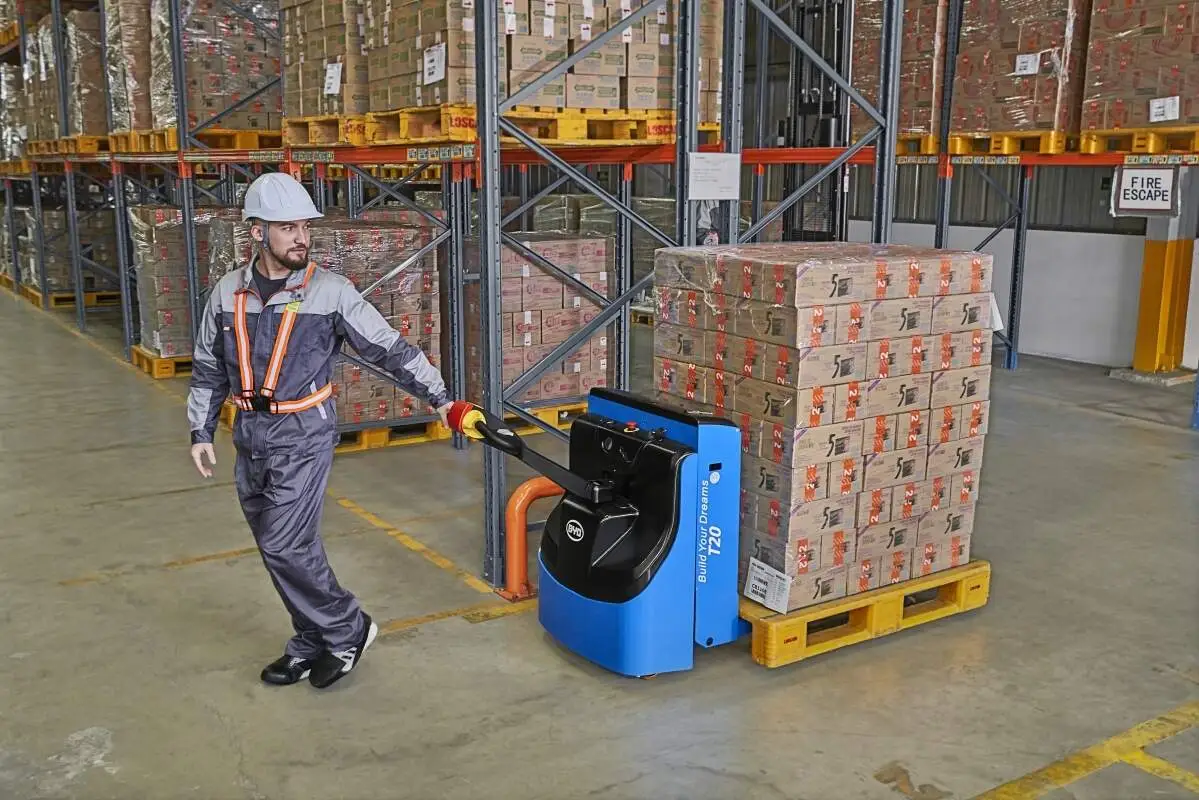
In the indoor storage workshop or production area of e-commerce, medicine, food electronics and other industries, the ground is often made of epoxy flooring, PVC flooring, ceramic tile flooring or cement flooring with a high degree of solidification, which is easily scratched by sharp objects or crushed by heavy tires. At the same time, these scenarios have certain requirements for the flexibility, stability and energy consumption level of handling equipment. Solid tire three-point lithium forklifts, with their own design and configuration characteristics, show good ground adaptability in such indoor scenarios, and gradually become one of the handling options for many enterprises.
First of all, from the perspective of tire material and structure, solid tires are different from inflatable tires and semi-solid tires. There is no air layer inside, so there will be no problem of tire blowout and leakage, and the contact pressure distribution to the indoor floor is relatively uniform. If the tire pressure of ordinary inflatable tires is too high, it may leave deep indentations on the soft ground, and long-term use may also damage the integrity of the floor. If the tire pressure is too low, the driving resistance will increase, the tire wear speed will also be accelerated, and the steering flexibility may be affected. The tread pattern of the solid tire has been optimized to provide sufficient grip without causing excessive pulling on the tile gap or epoxy floor coating, which can reduce the risk of damage to the indoor floor to a certain extent during daily driving and loading and unloading of goods, prolonging the service life of the floor.
The second is the structural design of the vehicle. The three-point layout allows the turning radius of the forklift to be smaller than that of the traditional four-point forklift. It is more flexible when moving between narrow shelf channels or production stations, and does not require large reversing adjustments. It reduces the number of repeated friction between the tire and the ground, further reducing the burden on the ground. At the same time, the center of gravity design of the three-point structure is relatively reasonable, and it can maintain good stability when loading conventional goods. It avoids the situation that the goods are offset due to vehicle shaking or the tire suddenly increases the pressure on the local ground. It is suitable for indoor scenes with high driving stability requirements, such as food workshops or electronic component warehouses that need to carry fragile items.
In addition, the configuration of lithium-ion power is also related to indoor ground adaptation. The weight distribution of lithium-ion forklifts is usually optimized so as not to produce excessive concentrated loads in local areas, which can better match the uniform pressure distribution characteristics of solid tires. Moreover, the starting and braking of lithium-ion forklifts are relatively smooth, and there will be no shaking or tire skid marks of sudden braking acceleration like some fuel forklifts, which makes the protection of indoor ground more obvious. In addition, lithium-ion forklifts have no exhaust emissions and are suitable for use in closed or semi-closed indoor environments. They will not cause air pollution, nor will they affect the cleanliness or the performance of ground materials due to impurities in the exhaust gas adhering to the ground.


