
 简体中文
简体中文 繁体中文
繁体中文 Deutsch
 日本語
日本語 한국어
한국어 Tiếng Việt
 Русский
 ไทย
ไทย Bahasa Indonesia
 Bahasa Melayu
 Filipino
 لالعربية
 Français

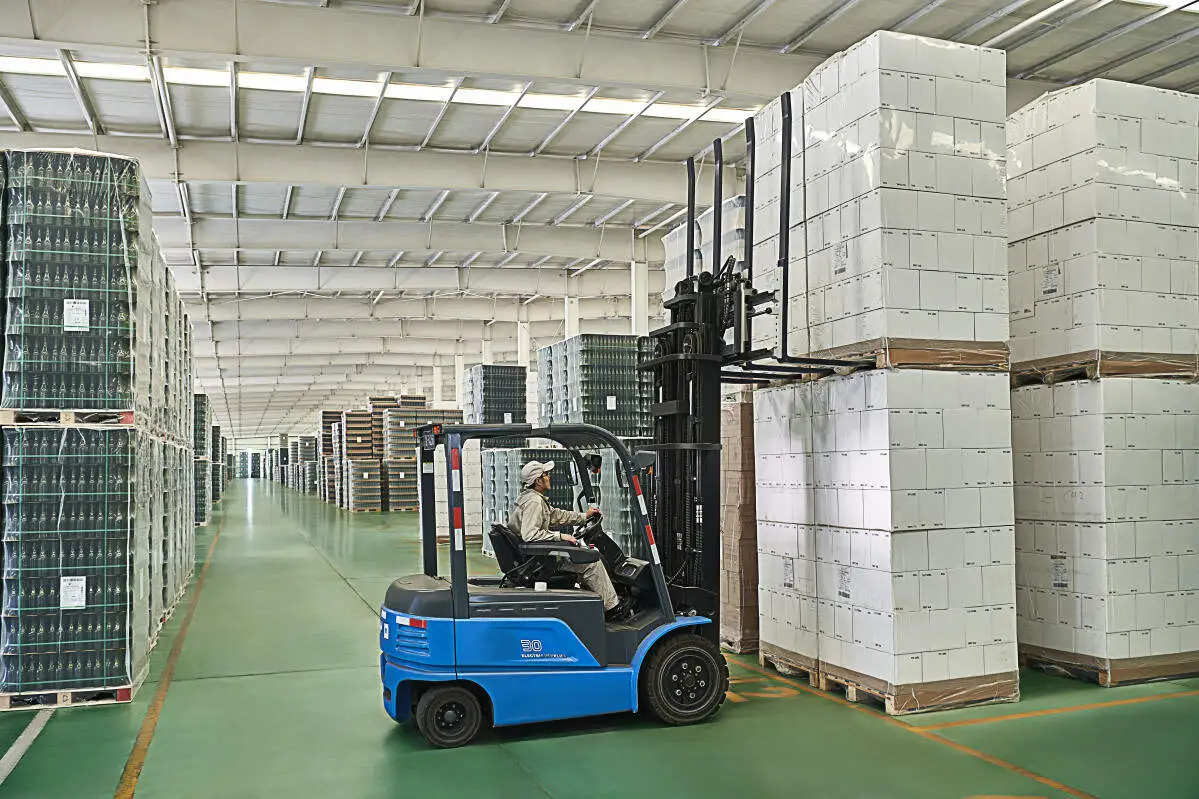
Under normal working conditions, the same-tonnage electric forklift is usually more compact and has a slightly smaller turning radius than the internal combustion forklift. The applicable channel width of the 1.5-ton lithium-ion forklift needs to be determined in combination with the operation scenario and relevant safety operation requirements. The body size is the basic reference. The body width of the conventional 1.5-ton lithium-ion forklift is mostly between 1.1 meters and 1.3 meters, and the minimum operating turning radius is mostly between 1.5 meters and 1.9 meters. If it is the minimum turning channel for two-way operation, the width usually needs to be reserved for the body width plus the safety margin of 0.3 meters to 0.5 meters on both sides, and then the space required for turning on both sides is superimposed, which is about 3.2 meters to 3.8 meters. If it is a one-way straight channel for single-sided tray pick-and-place, the width of the tray protruding from the body should be included. The common 1.2-meter-1-meter tray protrudes about 0.6 meters when picking and placing. At this time, the channel width can refer to the body width plus the single-side safety margin plus the half width of the tray, which is about 2.1 meters to 2.5 meters. In addition, personnel safety passages with a width of not less than 1.2 meters must be divided separately and kept clearly separated from the working passageway.
When renovating the plant, in addition to the width of the channel, it is also necessary to pay attention to the optimization of supporting conditions. On the ground, the vehicle's own weight and the total weight of full load need to be considered. The weight of the conventional 1.5-ton lithium-ion forklift is about 2 tons to 2.5 tons, and the total weight after full load can reach 3.5 tons to 4 tons. The ground needs to be flat and wear-resistant. It is recommended to use epoxy floor or hardened cement floor. The longitudinal slope does not exceed 3% and the transverse slope does not exceed 1.5% to ensure driving stability. In terms of lighting, the illuminance in the operation area needs to meet the general requirements of warehousing and logistics. The daily pickup and release area should not be less than 300 lux. The illumination should be properly raised and warning signs should be set at the corners of the channel. Reflective strips at night are also essential If a lithium charging area is set up in the factory building, it is necessary to choose a well-ventilated location away from flammable and explosive materials, and the ground should be treated with anti-skid insulation.


