
 简体中文
简体中文 繁体中文
繁体中文 Deutsch
 日本語
日本語 한국어
한국어 Tiếng Việt
 Русский
 ไทย
ไทย Bahasa Indonesia
 Bahasa Melayu
 Filipino
 لالعربية
 Français

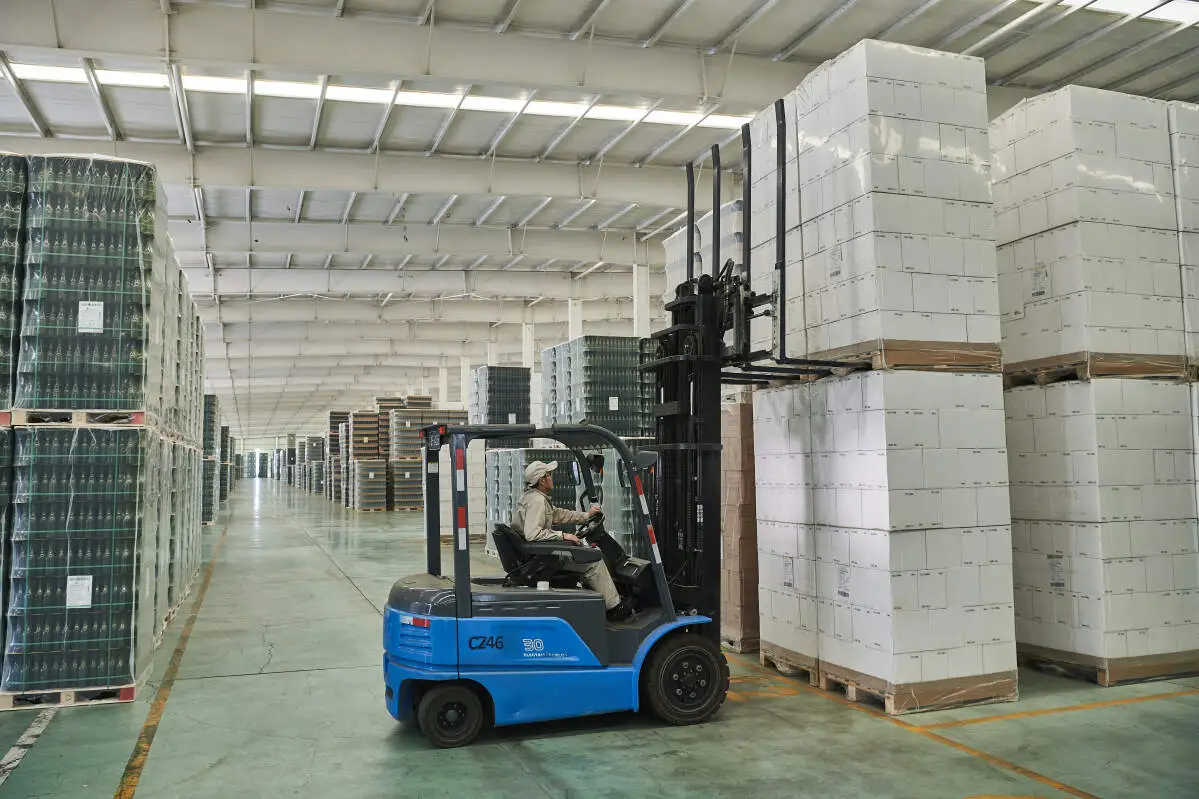
As a common storage and handling equipment, the daily maintenance and reasonable maintenance cost planning of 1.5-ton lithium-ion forklifts play an important role in ensuring operational efficiency and prolonging the service life of the equipment.
Daily maintenance can be divided into two parts: daily inspection, weekly cleaning and simple investigation. The daily inspection is recommended to be completed before the equipment is started. First, go around the car to observe whether there are obvious bumps in the appearance of the body, whether the tire tread pattern is clear, whether the air pressure is normal, and whether the tire screws are loose. Then check the brake system. When you step on the brake pedal, you should feel that the stroke is moderate and the feedback is strong. After loosening, the wheels can rotate normally. At the same time, pull up the handbrake to check whether it can effectively fix the vehicle. Then check the battery compartment. The door should be able to open and close normally. The internal connecting wire is not loose or damaged. The surface of the battery is clean and dry. There is no water or debris. The battery voltage shows that it is within the normal range. If there is any obvious ab Finally check the fork and the door frame, the fork no deformation, cracks, card spring, pin and other fasteners firm, the door frame lifting, tilting back and forth action smoothly, no card or abnormal sound.
Weekly cleaning and simple troubleshooting are carried out on the basis of daily inspection. Use a soft cloth or neutral cleaner to wipe the body, avoid using strong acid and alkali cleaners to prevent damage to the paint and electrical components. Clean dust and dirt on moving parts such as door frame rollers and chains, and apply appropriate grease to ensure smooth movement. Check the steering system, there should be no obvious gaps when turning the steering wheel, and the steering should be accurate. At the same time check the level of brake fluid and hydraulic oil. If it is lower than the scale line, you need to replenish the same type of oil. Before replenishing, make sure that the oil is clean and free of impurities.
Regarding the maintenance cost of a 1.5-ton lithium-ion forklift truck, it is mainly divided into three parts: replacement of wearing parts, conventional oil consumables, and professional maintenance. The replacement frequency of wearing parts such as tires, brake pads, chain springs, and gantry seals is closely related to the working intensity and working environment. Generally, when the amount of work is moderate and the environment is clean, the tire replacement cycle is about one to two years, and the brake pads are about half a year to one year. The replacement of small parts such as springs and seals is relatively scattered, and the single cost is not high. Conventional oil consumables are mainly brake fluid and hydraulic oil. The replacement cycle is usually one to two years, and the cost is relatively fixed. Professional maintenance is recommended to be carried out every six months or a year, mainly for the inspection of electrical systems, motors, battery status, etc. If the battery capacity decreases significantly, it can be decided whether to replace the battery cell or the entire group of batteries according to the actual situation. This is a relatively large part of the maintenance cost. However, reasonable daily maintenance can effectively delay battery decay and reduce this part of the expenditure.


