
 简体中文
简体中文 繁体中文
繁体中文 Deutsch
 日本語
日本語 한국어
한국어 Tiếng Việt
 Русский
 ไทย
ไทย Bahasa Indonesia
 Bahasa Melayu
 Filipino
 لالعربية
 Français

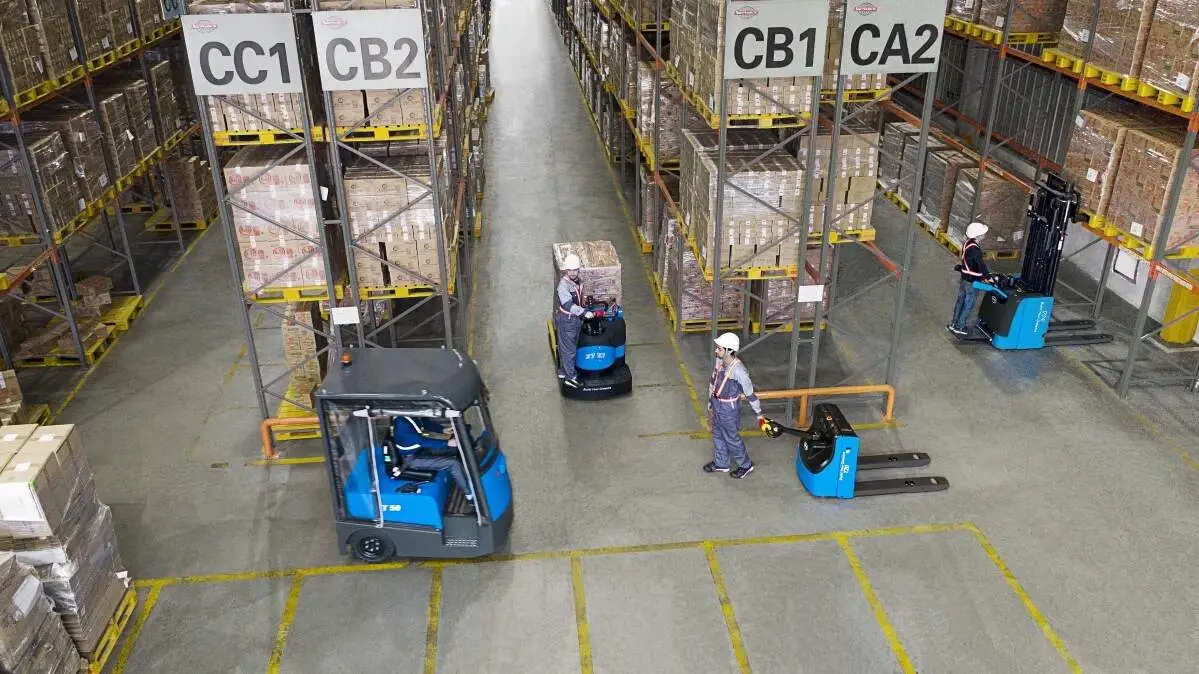
Electric forklifts are increasingly used in warehousing, logistics, and other scenarios due to their zero-emission and low-noise characteristics. Lithium batteries are its core power source, and the correct charging method is the key to ensuring operating efficiency and service life.
The scene where it is suitable to use slow charging on a daily basis is when the vehicle has sufficient idle time after completing the same day or multiple periods of continuous operation. The current of slow charging is small, which can more evenly complete the chemical reaction inside the battery and reduce battery loss. It is the first choice for daily charging. When operating slow charging, you must first confirm the charging environment. You should choose an indoor or semi-indoor area with good ventilation, no water accumulation, and no flammable and explosive substances. The ambient temperature should be controlled between 0 and 40 degrees Celsius. When the temperature is too low or too high, the charging plan can be adjusted appropriately. For example, in winter, the vehicle can be moved to a suitable environment for a period of time before starting. Before charging, turn off the total power supply of the vehicle to ensure that the vehicle is completely powered off, then connect the charging device in sequence, plug in the charging interface of the vehicle first, and then plug in the socket of the power supply. After it is fully charged, the system will automatically stop charging. At this time, it is recommended to wait about 10 minutes and then unplug the interface in the opposite order to avoid the impact of instantaneous current on the device. In daily use, it is recommended to keep the habit of shallow charging and shallow discharge as much as possible. When the remaining power is between 15% and 85%, slow charging can be arranged to avoid completely running out of booster charge.
The scene of emergency replenishment is suitable for the use of fast charging, such as the sudden increase in the amount of work on the day, when the vehicle power is insufficient but cannot be idle for a long time. The current of fast charging is large, which can replenish most of the power in a short time, but long-term frequent use will cause certain acceleration loss to the internal structure of the battery. Therefore, it is recommended to only use it as a temporary emergency means and not to replace the daily slow charging. When operating fast charging, it is also necessary to confirm the environment and the power-off status of the vehicle. The connection sequence is consistent with the slow charging. Generally, the fast charging can be replenished to about 80% to meet the needs of continued operation. After the replenishment is completed, the power end should be unpl
Whether using fast or slow charging, it is necessary to regularly check the status of the charging interface and charging cable to ensure that the interface is free of oxidation, dust, and the charging cable is not damaged or deformed. If any problems are found, they should be dealt with in a timely manner to avoid potential safety hazards.


