
 简体中文
简体中文 繁体中文
繁体中文 Deutsch
 日本語
日本語 한국어
한국어 Tiếng Việt
 Русский
 ไทย
ไทย Bahasa Indonesia
 Bahasa Melayu
 Filipino
 لالعربية
 Français

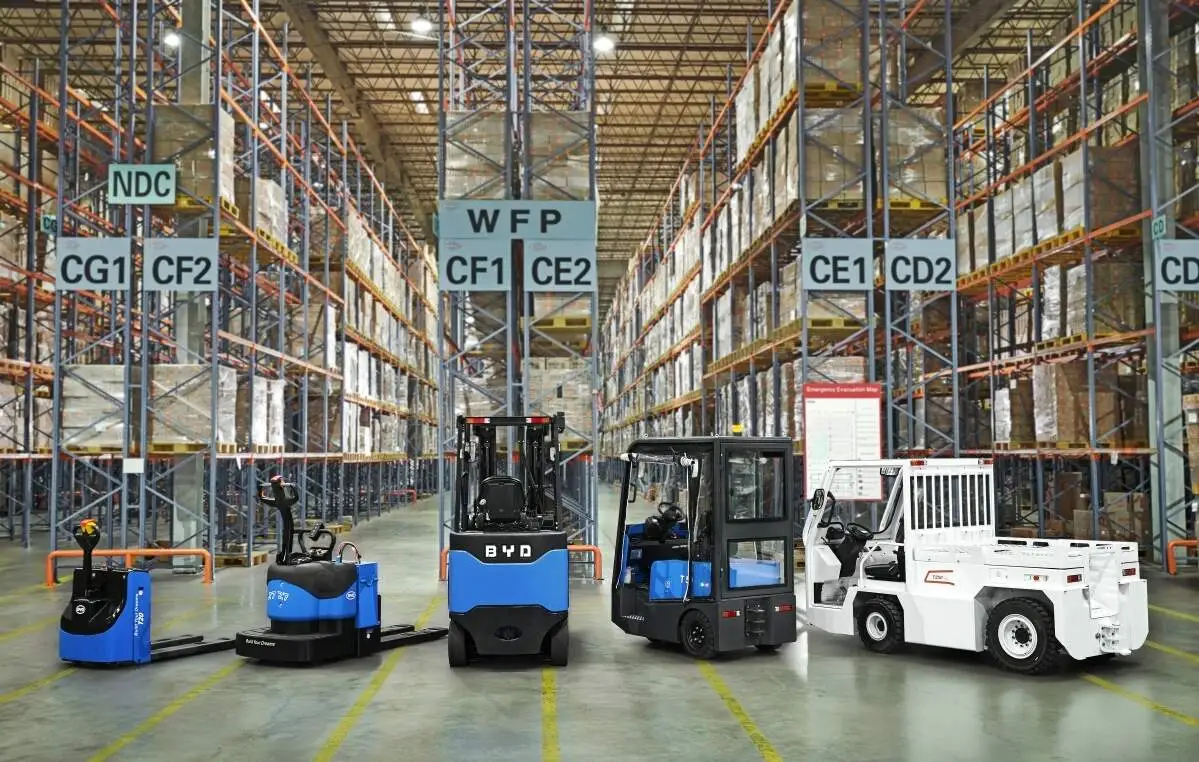
In the warehousing and logistics scenario, lithium-ion forklifts with a moderate lift height with small tonnage are increasingly widely used due to their advantages of flexibility, zero emissions, and low noise. Among them, models with a load of 1.5 tons raised by 3 meters are suitable for pallet handling, short-distance loading and unloading, and low-level stacking needs in most workshops. Next, start with the core components to analyze the gantry and battery configuration of this type of forklift.
The door frame is the core load-bearing lifting component of the forklift, which directly affects the operation efficiency and safety. The mainstream of this type of model adopts two-level door frames, which can be subdivided into two-level full-free lifting door frames and two-level ordinary lifting door frames. When the door frame of the two-level full-free lifting door frame is lifted, the inner door frame does not move first, and the fork can be lifted to a certain height independently, and then raised together with the inner door frame. It is suitable for low-space operations, such as entering and leaving the door frame with limited height, driving into the interior of the low-level shelf channel, etc.; the fork of the two-level ordinary lifting door frame is lifted synchronously with the inner door frame, and the overall vertical space is related to the lift height of the fork. It is suitable for open but the highest stacking or loading and unloading height is In addition, this type of door frame is mostly made of cold-rolled steel made of mainstream welding technology, with double-cylinder double-chain or double-cylinder single-chain structure. The former is more evenly stressed and suitable for long-term high-frequency or near-full-load operations. To optimize the operating field, most models will use a narrow door frame structure to reduce the distance between the inner door frame and the outer door frame.
Batteries are the power core of lithium-ion forklifts, which directly affect battery life and maintenance costs. Lithium iron phosphate batteries are preferred for this type of model in the storage field. Due to their good thermal stability, they are not prone to dangerous conditions when colliding, squeezing or puncturing, and have a long cycle life. They only need to do basic maintenance such as cleaning and heat dissipation on a daily basis. In terms of capacity, it needs to be selected according to actual needs. For example, if the average daily operation is 5 to 8 hours, at room temperature and with an average load of about 1 ton, a 48-volt battery of 210 to 260 ampere hours can basically meet the requirements. If the average daily operation is 8 to 12 hours, or if it is operated in a low temperature environment for a long time and is fully loaded, a larger capacity or a spare battery pack on the When charging daily, it is recommended to use a matching intelligent slow charge as the main one. It generally takes 8 to 12 hours to fully charge, which can prolong the battery life. If you encounter temporary power-up needs, you can use a fast charging device of the same specification, which can be recharged to about 80% in 2 to 4 hours, but avoid frequent use.
Reasonable selection of the gantry and battery configuration can better adapt the lithium-ion forklift with a height of 3 meters and 1.5 tons to the operation scene, improve the use experience, and reduce long-term use costs.


