
 简体中文
简体中文 繁体中文
繁体中文 Deutsch
 日本語
日本語 한국어
한국어 Tiếng Việt
 Русский
 ไทย
ไทย Bahasa Indonesia
 Bahasa Melayu
 Filipino
 لالعربية
 Français

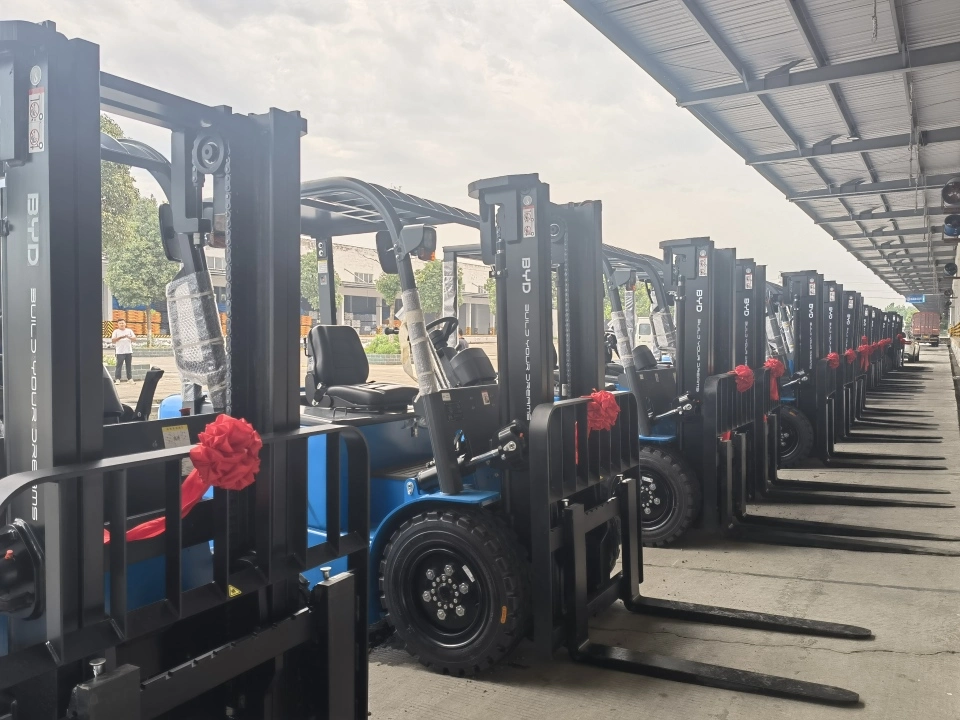
The goods in our factory are mainly building materials and packaged hardware, which need to be transferred between multiple factories, warehouses and outdoor temporary stacking points. The traditional fuel forklifts and ordinary lead-acid forklifts used before are very troublesome in rainy seasons or sudden showers. This year, I replaced a waterproof lithium-electric forklift, which has been used for more than half a year. There are many real feelings to share.
The first is the outdoor waterproof performance that everyone is most concerned about. The temporary stacking point of our factory is close to the edge of the freight channel, and there is no roof. It is not uncommon for it to rain for a week in the rainy season. The key parts of this waterproof car lithium battery forklift have been protected. The goods are loaded and unloaded at the temporary point on rainy days, and there has been no battery failure, instrument failure or abnormal motor noise. When cleaning the factory area, it is no problem to simply rinse the bottom of the body and the sediment around the tires, but the operator will still pay attention to avoid directly initializing the core area of the battery compartment and the motor. After all, protection only reduces risks, and daily rational use is very important.
Then there is the experience of battery life and charging. Our factory works in two shifts. The previous lead-acid forklift needed to be charged once a day at noon and once a day at night. Not only did it take a long time to charge, but it also had to find a ventilated charging area for fear of potential safety hazards. This waterproof lithium-battery forklift is fully charged at one time, and it normally transports more than 100 boxes of goods in one shift for eight hours during the day and travels 200 or 300 meters through the factory channel. There is still about one-third of the power left. You can change shifts at night and then use it. It can be fully charged in two or three hours the next morning, and the efficiency has improved a lot. Moreover, the battery has no memory effect, so it does not need to be completely dead every time. Plugging in the charging cable during the break will not affect the battery life
There is also a significant improvement in the sense of handling. The seat is slightly more spacious than the previous lead-acid forklift, the seat can be adjusted according to height, and the backrest is also supported, so that the waist and neck will not be too sour to sit down in a day. The steering wheel is relatively light, the steering is flexible, and it is convenient to turn and turn between narrow factory passages and temporary stacking points. The response of the throttle and brakes is also very linear, and the speed can be well controlled when loading and unloading goods, and there will be no shaking of goods. The instrument panel is LCD display, which can clearly see the power, driving speed and working hours, which is very intuitive.
Daily maintenance is also much simpler than before. Fuel forklifts need to change the oil and filter regularly, check the spark plugs, which is expensive to maintain and has oil pollution. Lead-acid forklifts need to add water regularly and check the density of electrolyte, which is more troublesome to maintain. This waterproof seat lithium-electric forklift only needs to check the tire pressure, clean the body and battery heat dissipation port every day, and does not require complicated maintenance operations, saving a lot of time and cost.
Overall, this waterproof lithium-ion forklift is very suitable for factories like ours that have outdoor cargo transshipment needs. It solves the problems of rainy days, insufficient battery life, and maintenance troubles encountered before, and enhances overall work efficiency.


